The short answer: it depends on whether you want to stay in your home. If you love where you live, a reverse mortgage lets you stay, get rid of your mortgage payment and use a portion of your home's value. If you're ready for a smaller place or want to be near family, selling may be the better fit. You can even use a reverse mortgage to buy your next home.
A lot of people call me after a family member says, "Why don't you just sell the house?" Sometimes that's the right answer. Most of the time, though, the people I meet want to stay right where they are. Here's how the two choices compare.
Key facts at a glance
- A reverse mortgage lets you stay in your home with no monthly mortgage payment.
- Selling means real estate commissions, closing costs and moving costs, plus the cost of your next place.
- With a reverse mortgage you keep the title and any leftover equity goes to your family.
- You can use a reverse mortgage to buy a new home that fits you better, with no monthly mortgage payment.
- There's no wrong answer. The right choice is the one that fits how you want to live.
Staying vs. selling at a glance
| Reverse mortgage and stay | Sell and downsize | |
|---|---|---|
| Where you live | Your home, your neighborhood | A new, usually smaller place |
| Monthly mortgage payment | None required | Depends on how you pay for the next place |
| Moving | No move | Packing, movers and starting over |
| Costs to get there | Closing costs, financed in the loan | Commissions, closing costs, moving, new furniture |
| Your equity | You use a portion now; the rest stays with the house | You get cash now, minus selling costs |
| Your family | Keeps any equity left later | Keeps whatever you don't spend |
When staying makes sense
- You love your home and your neighbors.
- Your doctors, church and friends are close by.
- The house still works for you, or can with a few changes like grab bars or a first floor bedroom.
- Moving would cost more than it saves.
When selling makes sense
- The house is more than you want to take care of.
- You want to move closer to your kids or grandkids.
- Stairs or upkeep have become hard and the house can't be changed easily.
The best of both: buy your next home with a reverse mortgage
If you do want to move, there's a reverse mortgage for buying a home. You sell your current house, put part of the money toward the new one, and the reverse mortgage covers the rest. You move into a home that fits you, with no monthly mortgage payment, and keep more of your cash in the bank.
I don't tell anyone to stay or sell. I show them the numbers both ways, and they almost always know which one feels right once they see it.
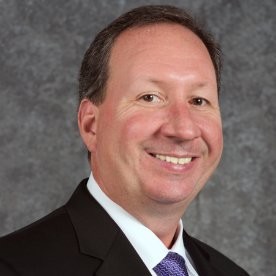
Mark McVearry, NMLS 27670, Reverse Mortgage Answers
Not sure whether to stay or sell? Give me a call and I'll show you your options. You don't pay for the appraisal up front, so the only out of pocket cost is the counseling session. At your home or by phone anywhere in Maryland, DC, Virginia and Delaware.
Call 410-788-7070 or see if you qualify.
Frequently asked questions
Is a reverse mortgage better than selling my house?
If you want to stay in your home, a reverse mortgage lets you do that with no monthly mortgage payment. If you're ready for a smaller place or want to be near family, selling may fit better.
Can I use a reverse mortgage to buy a smaller home?
Yes. A reverse mortgage for purchase lets you buy a new home with part of your money down and no monthly mortgage payment.
What does it cost to sell and move?
Selling usually means real estate commissions, closing costs and moving costs, plus whatever the next place costs. A reverse mortgage has closing costs too, but they're financed in the loan.
Can I sell my house later if I get a reverse mortgage?
Yes. You can sell any time. The loan is paid off from the sale and you keep the rest.
Who keeps the equity if I stay?
You do while you live there, and your family keeps whatever is left after the loan is paid off.
Related reading: How Much Money Can I Borrow With a Reverse Mortgage? · Can I Pay Off My Reverse Mortgage Early?
About the author: Mark McVearry
Mark has spent more than 30 years helping homeowners 62 and older use reverse mortgages in Maryland, Washington DC, Virginia and Delaware. He has helped thousands of homeowners and is known for commonsense, easy to understand explanations, so his clients know what to expect every step of the way. He is a licensed mortgage loan originator (NMLS 27670) with Acre Mortgage & Financial Inc. (NMLS 13988), working from his office at 1015 Vineyard Hill Road, Baltimore, MD 21228. His clients can go from application to closing without leaving home. More about Mark.
Sources
- U.S. Department of Housing and Urban Development, 2026 Nationwide HECM Limits.
- HousingWire, Senior housing wealth tops $15 trillion for the first time.
Mark McVearry, NMLS ID 27670. Loans are made through Acre Mortgage & Financial Inc., NMLS ID 13988, an Equal Housing Lender: District of Columbia Mortgage Dual Authority License #MLB13988; Maryland Mortgage Lender License #13988; Virginia Lender License #MC 5586; Delaware License #7695. Reverse Mortgage Answers is the marketing name Mark uses and is not a lender. This material is not provided by, nor was it approved by, the Department of Housing & Urban Development (HUD) or the Federal Housing Administration (FHA). Borrower will be responsible for the payment of property taxes, insurance and complying with the terms of the loan. Examples are illustrations only; your results depend on your age, interest rate, home value and loan terms. This article is general information, not legal, tax or benefits advice.